
AI for Insurance Claims: Quick Summary
Claim resolution is broken for most insurers — slow, expensive, and full of manual gaps. AI fixes that by cutting claim resolution costs dramatically, boosting your claims team’s productivity, and shrinking claim cycles from weeks to minutes through intelligent automation. It is one piece of our broader insurance software development and artificial intelligence consulting work.
- AI-powered claim systems handle the majority of simple claims in a straight-through manner — decisions in minutes, not weeks.
- They catch fraud instantly, produce accurate damage estimates, and give your team smart recommendations that reduce financial exposure at every step.
- Generative AI is making this even bigger — insurers who move now are positioning themselves to cut loss-adjusting expenses significantly in ways that weren’t possible just a few years ago.
Key AI Features for Insurance Claims
Every AI solution we build at INNERLUXES is shaped around your specific needs. Here are the most requested features from insurance clients across our 68 delivered projects. Pair claims AI with AI for insurance underwriting and AI assistants for insurance, and explore the latest trends in insurance AI.
Automated claim intake
- Real-time processing of digital and handwritten documents.
- Image, audio, and video claim capture.
- ML-powered data extraction and structuring.
- Large language models (LLMs) for document understanding.
- Zero manual input for standard submissions.
Automated claim triaging
- Policy terms and coverage cross-check.
- Injury and damage severity scoring.
- Settlement risk prioritization.
- Auto-routing to the right specialist.
- Real-time urgency flagging.
Fraud detection & validation
- Cross-reference with policy and external data.
- Fraudulent pattern recognition.
- Anomaly detection at submission.
- Late and misrepresented claim alerts.
- Specialist escalation routing.
Intelligent claim decisioning
- Data-backed approval and rejection recommendations.
- Faked claim identification.
- Coverage gap analysis.
- Complex case smart routing.
- Explainable AI decisioning for regulators.
Remote damage inspection
- Computer vision-based damage detection.
- Real-time monitoring of any environment.
- Vehicle and property damage photo analysis.
- Industrial site automated assessment.
- Multi-source image and video processing.
Claim cost forecasting
- Expected cost projection by period and segment.
- Payment history and risk profile integration.
- External risk signal monitoring.
- Finance team visibility dashboards.
- Regional and portfolio-level forecasting.
Prescriptive loss analytics
- Real-time policyholder behavior monitoring.
- Asset condition risk signals.
- Proactive claim prevention recommendations.
- Loss mitigation workflow automation.
- Trend-based early warning alerts.
Automated customer comms
- AI-powered virtual assistants for 24/7 claim queries.
- Automated follow-ups and document requests.
- Decision notification automation.
- Intelligent escalation to human agents.
- Multi-channel communication support.
Intelligent supplier match
- Auto-match to repair shops and healthcare providers.
- Location, capacity, and pricing optimization.
- Service company availability check.
- Claimant preference integration.
- Supplier performance tracking.
Analytics damage assessment
- Claim document and external data review.
- Accurate compensation calculation.
- Consistency across every claim decision.
- Guesswork elimination from adjusting.
- Audit-ready assessment logs.
How AI for Insurance Claims Works
An AI solution for insurance claims connects with your core insurance systems, customer apps, and third-party data sources to capture claim data the moment it comes in — structured or not.
Data capture & ingestion
Raw claim data from core insurance systems, customer apps, and third-party sources is captured in real time — structured and unstructured alike, the moment it arrives.
Preprocessing pipeline
Data moves into a central data lake, gets cleaned, enriched, and normalized through an advanced preprocessing pipeline, landing in a data warehouse ready for real analysis.
ML engine & neural models
A machine learning engine trained on the right data evaluates claim details, flags anomalies, and delivers damage estimates and approval recommendations with genuine precision.
Continuous model retraining
Our data scientists recommend neural network-based models for complex cases. Every insight feeds back into the system — making the next call sharper than the last through continuous retraining.
System integration & delivery
Results are shared instantly with your claim management app, insurance portal, underwriting software, and accounting system — so everyone who needs the information has it without delay.
LLM-based adjuster agents
The architecture can be extended with LLM-based agents to automate full adjuster workflows — from investigation and damage assessment to fraud detection and multi-party settlement.

Faisal Ahmad
Senior Insurance IT & AI Consultant
at INNERLUXES
“For AI in insurance claims, accuracy is non-negotiable. We design and validate every model against curated insurance datasets with rigorous testing pipelines — and build explainability in from the start so every decision can be reviewed, justified, and defended by regulators and your own team.
Selected AI Projects by InnerLuxes
Challenges of AI for Insurance Claims
AI in claims isn’t plug-and-play. The risks are real — and ignoring them is what separates a failed implementation from one that genuinely delivers. Here’s how INNERLUXES approaches the hardest parts.
Achieving high accuracy. Claim decisions affect real people and real money. A model that is mostly right is not good enough here.
Solution: Our data scientists design and train models specifically for insurance claim environments using curated datasets and rigorous validation. We build explainability in from the start.
Sensitive data security. Claim data includes personal details, financial records, and health information — all requiring airtight protection.
Solution: INNERLUXES builds security into the architecture from day one — encryption, access controls, audit logging, security testing, and network vulnerability scanning baked into every layer.
Regulatory compliance. Insurers operate under complex, evolving rules across multiple jurisdictions that the AI system must fully satisfy.
Solution: We adhere to NAIC, NIST AI RMF, GLBA, HIPAA, NYDFS, GDPR, AI Act, SOC 1/2, and state-level regulations — compliance is a core design requirement, not an afterthought.
Tech Stack for AI Insurance Claims
We pair proven AI frameworks with modern infrastructure — choosing the right technology for your claims environment, not the trendiest one.
Generative AI
 LLMs
LLMs SLMs
SLMs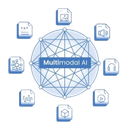 Multimodal
 Computer Vision
 ASR Speech
 Audio Models
 Azure OpenAI
 Amazon Bedrock
 Hugging Face
 Oracle Cloud
 LangChain
 LangGraph
 OpenAI Agents
 AWS Agents
 n8n
n8n Dify
Dify Faiss
Faiss ChromaDB
 Qdrant
 Weaviate
 Neo4j
Neo4j Pgvector
Traditional ML
 Azure ML
 SageMaker
 Vertex AI
 TensorFlow
 PyTorch
 Scikit-Learn
 OpenCV
 Keras
Keras SpaCy
SpaCy Python
 Java
Java Scala
Scala R
RDevOps & Security
 Docker
 Kubernetes
 Azure DevOps
 Jenkins
 AWS Dev Tools
 Datadog
 Grafana
 Prometheus
Implement AI for Insurance Claims with INNERLUXES
AI consulting and implementation for insurance claims
Not sure where to start? We’ll design the right feature set, architecture, and tech stack for your situation — and deliver a proof of concept so you can test viability before committing to full build. See also our guide on how to develop AI software.
I’m Interested →AI implementation for
insurance claims
Ready to build? Our engineers handle everything from project planning through deployment and ongoing support, delivering custom software solutions for the insurance industry. Our data scientists design, train, and continuously tune your AI models for sustained accuracy.
I’m Interested →AI model tuning &
ongoing support
Your AI claim system is live — but models need care to stay accurate as your data grows. We handle continuous retraining, performance monitoring, and model updates so results stay sharp, backed by established practices and an quality management system.
I’m Interested →Costs of AI for Insurance Claims
From INNERLUXES’s experience across 68 delivered projects, the cost of building a custom AI solution for insurance claim processing depends on scope, model complexity, and integration depth.
Scope & feature complexity
The more claims workflows you automate — intake, triaging, fraud detection, decisioning — the larger the build. Starting with a focused MVP keeps early costs controlled.
AI model type & count
Neural networks for complex cases, LLMs for document understanding, computer vision for damage inspection — each adds specialist engineering effort and training cost.
System integrations
Connecting to core insurance systems, underwriting tools, accounting platforms, and third-party data sources varies significantly in complexity and cost.
Compliance requirements
NAIC, HIPAA, GDPR, state-level AI rules — each regulatory framework adds audit logging, explainability engineering, and validation overhead to the build.
Data availability & quality
Model accuracy depends directly on training data quality. Poor or sparse historical claim data extends data preparation timelines and adds cost to the ML phase.
Delivery model & team
Whether you need full outsourcing, a dedicated team, or staff augmentation shapes your cost structure. We tailor the engagement model to your budget and timeline.
Want to understand what your specific solution would cost? Share your project details and we’ll respond within one business day with a tailored estimate.
AI for Insurance Claims – Q&A
AI automates claim intake, triaging, validation, and decisioning — reducing manual effort, catching fraud early, and cutting claim cycle times from weeks to minutes for straightforward cases. The result is happier customers, fewer losses, and a team that spends time on what actually matters.
We adhere to NAIC AI Principles, US state-level regulations, NIST AI RMF, GLBA, NYDFS, CCPA, HIPAA (for health insurance), GDPR and AI Act (for the EU), SOC 1/2, and bank-grade model risk management practices. Compliance is a core design requirement baked into every layer of the solution — not an afterthought.
Timeline depends on scope, integration complexity, and data availability. INNERLUXES can deliver a proof of concept first so you can validate viability before committing to a full build. Contact us for a tailored project plan and realistic timeline for your specific situation.